Publications
 Partners





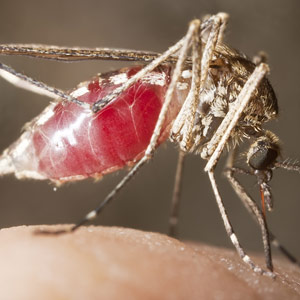
Researchers in Australia have provided the final piece of a puzzle to develop a new anti-malarial drug, which targets the parasite that causes the disease and kills it with a salt overdose.
The drug, the first discovery in the fight against malaria in two decades, holds out fresh hope for conquering the disease, which claims hundreds of thousands of lives a year and is known for its evolving drug resistance.
The malaria parasite, carried to humans by mosquitoes, lives in red blood cells, which are full of salt. To survive, researchers knew it had to have a way of filtering salt out of its body."The parasite is quite leaky, it's letting salt in all the time.
How the study was done
But that doesn't matter because it's got a very effective molecular salt pump that keeps pushing the salt out again," said Professor Kiaran Kirk, director at the Research School of Biology at Australia National University (ANU).
Research teams in the United States and Singapore had developed a drug that attacked the protein that makes up the salt pump, but it wasn't until the ANU researchers tested it that they confirmed it worked effectively."On the one hand, they had a brand new drug, they didn't know how it worked," said Kirk, whose team published their work in the journal Cell Host and Microbe.
"We knew a lot about salt and salt pumps, and it was clear their drug was knocking out our salt pump. That led us to work together."The drug attacks the salt pump and disables it, causing the parasite to fill up with salt and die.
Targeting such a basic function is crucial because malaria tends to evolve quickly, rendering other drugs ineffective. Other drugs that combat malaria combine or package older drugs together or are altered chemically.
First drug in 20 years
"This is actually the first drug for 20 years to be genuinely new," Kirk said. "Targeting the pump protein is a structure that has never been used before to treat malaria."The drug is undergoing clinical trials and it will be several years at least before it hits the market.
The other two groups involved are the Novartis Institutes for Tropical Disease in Singapore and the Genomics Institute of the Novartis research Foundation. Malaria infects more than 200 million people worldwide every year and kills around 600 000 of them - primarily children under the age of five in sub-Saharan Africa.
Experts say one of the most challenging features of this parasite is its ability to evolve and overcome anti-malarial drugs - a factor that is undermining global work towards eradicating the killer disease.