


 Publications
 Partners


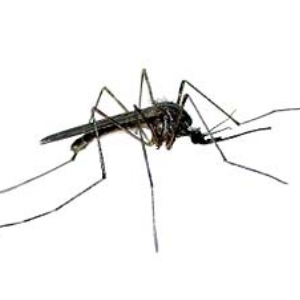
Identifying areas of malarial infection risk depends more on daily temperature variation than on the average monthly temperatures, according to a team of researchers, who believe that their results may also apply to environmentally temperature-dependent organisms other than the malaria parasite.
"Temperature is a key driver of several of the essential mosquito and parasite life history traits that combine to determine transmission intensity, including mosquito development rate, biting rate, development rate and survival of the parasite within the mosquito," said Justine I. Blanford, research associate in geography, Penn State's the Geovista Center.
While other variables, such as the necessary rainfall to support mosquito development, also influence malaria transmission, temperature controls a variety of lifestages of both the mosquito and the malaria parasite.
How the research was done
The Penn State researchers include Blanford; Simon Blanford, senior research associate in biology; Robert G. Crane, professor of geography and director of Penn State's Alliance for Education, Science, Engineering and Development in Africa; Michael Mann, Distinguished Professor of Meteorology; Krijn P. Paaijmans, post doctoral researcher; and Matthew Thomas, professor in ecological entomology and Center for Infectious Disease Dynamics; and Kathleen V. Schreiber, professor of geography, Millersville University of Pennsylvania.
The researchers first looked at four locations in Kenya that represented four different climates, including warm arid conditions and cool upland conditions. They looked specifically at the Extrinsic Incubation Period, the length of time it takes for a parasite to complete development inside a mosquito from initial acquisition through an infected blood meal to transmission to a host via another blood meal. The researchers published their results in the current issue of Scientific Reports.
They found that EIP measurements based on mean monthly temperatures and mean daily temperatures were similar to each other in all cases. For the measurements based on hourly temperatures, the researchers found that for warmer locations, the EIPs were significantly longer. For cooler locations, the EIPs were substantially shorter than those calculated using mean monthly or mean daily temperatures.
"To estimate 'true' EIP we need to capture the influence of daily temperature fluctuations using hourly temperature data," said Justine Blanford. "But hourly temperature data does not exist for all locations in Kenya or across Africa."
The researchers estimated hourly temperatures using data on minimum monthly and maximum monthly temperatures. This does not equal the hourly temperatures but can be compared to the mean monthly temperatures usually used to determine malaria risk. This estimation method compared well with the data from the four Kenyan locations.
What the study found
Applying this method to other locations in Kenya, they found that
"mean temperatures overestimate parasite development rate under warm
conditions, provide a good approximation of growth under intermediate
conditions and underestimate development under cool conditions."
When looking at all of Africa, the area in and around the equator has similar EIP measurements regardless of the method used. However, there are areas in Africa where current methods over or under estimate EIP by 100% or more.
"The vast majority of ecological studies examining temperature-dependent effects consider mean temperature alone," said Justine Blanford.
According to the researchers, daily temperature dynamics could have marked effects on many species, affecting understanding of both current ecology and the expected responses to future climate change.











