Publications
 Partners


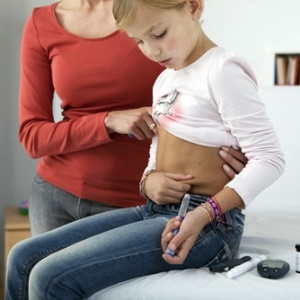
Furthermore, having your fingers pricked a few times a day is also not pleasant. Diabetic children have to learn to deal with both these daily procedures.
In type 2 diabetes, the treatment centres on the control of blood sugar through nutritional intake and medication. Type 1 diabetes requires daily doses of insulin.
Equipment needed for daily blood glucose testing include a glucose meter, a lancing device, glucose meter strips a pricker, insulin, insulin syringes, alcohol and cotton.
There are new developments in the field of diabetes management – most notably non-invasive blood glucose technology, where blood glucose can be measured without pricking the skin. This is done by means of an infrared light which is focused on a person’s finger for about half a minute. By studying the emerging light, the concentration of glucose can be measured.
The circumvention of the necessity for daily injections is also a focus of research into diabetes management.
However, many of these new devices are still in the testing stages, but as a result of their high cost, will not really be a viable option to many diabetics within South Africa. It is nevertheless advisable to ask the doctor about any new developments. - (Health24, updated February 2010)