Publications
 Partners


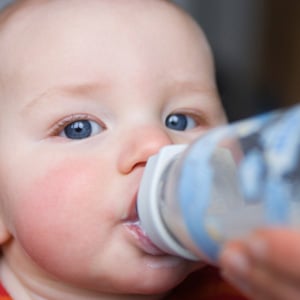
Researchers at the Columbia Center for Children's Environmental Health at the Mailman School of Public Health are the first to report an association between early childhood exposure to the chemical bisphenol A (BPA) and an elevated risk for asthma in young children. BPA is a component of some plastics and is found in food can liners and store receipts.
Results appear in the March edition of the Journal of Allergy and Clinical Immunology.
"Asthma prevalence has increased dramatically over the past 30 years, which suggests that some as-yet-undiscovered environmental exposures may be implicated. Our study indicates that one such exposure may be BPA," says lead author Kathleen Donohue, MD, an assistant professor of Medicine at Columbia University College of Physicians and Surgeons and an investigator at the Center for Children's Environmental Health.
How the study was done
Dr. Donohue and her co-investigators followed 568 women enrolled in the Mothers & Newborns study of environmental exposures. BPA exposure was determined by measuring levels of a BPA metabolite in urine samples taken during the third trimester of pregnancy and in the children at ages 3, 5, and 7. Physicians diagnosed asthma at ages 5 to 12 based on asthma symptoms, a pulmonary function test, and medical history. A validated questionnaire was used to evaluate wheeze.
After adjusting for second hand smoke and other factors known to be associated with asthma, the researchers found that post-natal exposure to BPA was associated with increased risk of wheeze and asthma. BPA exposure during the third trimester of pregnancy was inversely associated with risk of wheeze at age five. This unexpected finding is in contrast to the results of a previous study, which found that BPA exposure during the second trimester, a critical period for the development of airways and the immune system, was positively linked with risk for asthma.
Increased risk for wheeze and asthma was seen at "fairly routine, low doses of exposure to BPA," says Dr. Donohue. "Like most other scientists studying BPA, we do not see a straightforward linear dose-response relationship."
At all three time points, more than 90% of the children in the study had detectable levels of BPA metabolite in their bodies, a finding that is in line with previous research. This does not mean that they will all develop asthma, cautions Dr. Donohue. "Just as smoking increases the risk of lung cancer but not everyone who smokes gets lung cancer, not every child exposed to BPA will develop asthma."
The biological mechanism behind the BPA-asthma connection is unclear. The current study found no evidence that exposure to BPA increased the risk that the immune system would develop more antibodies to common airborne allergens. "Other possible pathways may include changes to the innate immune system, but this remains an open question," says Dr. Donohue.
The new study builds on existing evidence linking BPA exposure to respiratory symptoms, as well as to obesity, impaired glucose tolerance, and behavioural issues, among a range of health problems. In July, the Food and Drug Administration banned BPA in baby bottles and sippy cups.
"It is very important to have solid epidemiologic research like ours to give the regulators the best possible information on which to base their decisions about the safety of BPA," says senior author Robin Whyatt, DrPH, professor of Environmental Health Sciences and deputy director of the Columbia Center for Children's Environmental Health.
To reduce exposure to BPA, the National Institute of Environmental Health Sciences (NIEHS) recommends avoiding plastic containers numbers 3 and 7, eating less canned food, and, when possible, choosing glass, porcelain, or stainless steel containers, especially for hot food and liquids.