Publications
 Partners


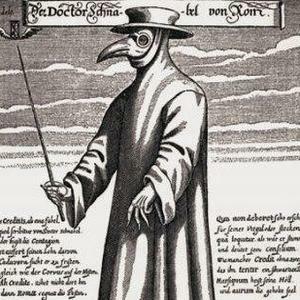
A News24 report states that officials in Madagascar are trying to contain an outbreak of plague - similar to the Black Death that swept Medieval Europe - that has killed 40 people and is spreading to the capital Antananarivo.
So far this year two people have been infected in Antananarivo, one of them dying, and health workers have mounted a pest control campaign through slum areas around the city, the World Health Organisation says.
According to the International Committee of the Red Cross, Madagascar has recorded on average 500 cases of plague every year since 2009. In 2013 the Ministry of Health ascribed the high number of deaths in Mandritsara to late detection of the disease and the fact that people first resorted to traditional medicine.
In 2013 at least 21 people died in one week during December after contracting pneumonic plague (one of the three forms of plague - see below).
Plague was last recorded in 1982 in South Africa, in a remote village in the Eastern Cape.
What is the plague?
Bubonic plague is an infection of the lymphatic system, the pneumonic plague is an infection of the respiratory system, and the septicemic plague is an infection in the blood stream.
According to the WHO Collaborating Centre for Plague in Antananarivo, plague is a re-emerging disease and pneumonic plague is the most feared clinical form.
Symptoms of plague include shortness of breath, chest pain and cough, sometimes coughing up blood and blood in the sputum. It's often accompanied by fever, headache, and weakness.
Treatment of plague: Antibiotics are effective in the treatment of plague, and should be started as soon as possible to prevent complications. The antibiotics used for treating plague include tetracyclines (such as doxycycline), fluoroquinolones (such as ciprofloxacin) and amingolycosides (including streptomycin and gentamycin).
History of Bubonic plague
The Bubonic plague signified real terror in urban communities for hundreds of years. Spread by airborne bacteria or by infected fleas living on rats in unhygienic urban conditions, this disease wiped out two-thirds of the inhabitants of parts of Europe in the 14th century.
The plague returned for centuries, often in the summer months. It is thought that the Great Fire of London in 1666 was largely responsible for ending this scourge in London, as it destroyed many of the favourite haunts of the rats which bore the infected fleas.
But in other areas, including modern urban environments, the Black Plague (aka Black Death) is still a reality – although a lot less terrifying since the advent of antibiotics.
TIP: Read more about the plague, alternative names and treatments
Here are some more facts about this disease:
National Institutes of Health, the middleages.net. Health24
So far this year two people have been infected in Antananarivo, one of them dying, and health workers have mounted a pest control campaign through slum areas around the city, the World Health Organisation says.
According to the International Committee of the Red Cross, Madagascar has recorded on average 500 cases of plague every year since 2009. In 2013 the Ministry of Health ascribed the high number of deaths in Mandritsara to late detection of the disease and the fact that people first resorted to traditional medicine.
In 2013 at least 21 people died in one week during December after contracting pneumonic plague (one of the three forms of plague - see below).
Plague was last recorded in 1982 in South Africa, in a remote village in the Eastern Cape.
What is the plague?
Bubonic plague is an infection of the lymphatic system, the pneumonic plague is an infection of the respiratory system, and the septicemic plague is an infection in the blood stream.
While Bubonic plague is transmitted to humans via fleas living on rats, Pneumonic plague is the most virulent and least common form of plague and can be inhaled and transmitted between humans without involvement of animals or fleas.
It occurs when Yersina pestis bacteria infect the lungs and cause pneumonia and, without treatment, it can kill within 24 hours.
It occurs when Yersina pestis bacteria infect the lungs and cause pneumonia and, without treatment, it can kill within 24 hours.
According to the WHO Collaborating Centre for Plague in Antananarivo, plague is a re-emerging disease and pneumonic plague is the most feared clinical form.
Symptoms of plague include shortness of breath, chest pain and cough, sometimes coughing up blood and blood in the sputum. It's often accompanied by fever, headache, and weakness.
Treatment of plague: Antibiotics are effective in the treatment of plague, and should be started as soon as possible to prevent complications. The antibiotics used for treating plague include tetracyclines (such as doxycycline), fluoroquinolones (such as ciprofloxacin) and amingolycosides (including streptomycin and gentamycin).
History of Bubonic plague
The plague returned for centuries, often in the summer months. It is thought that the Great Fire of London in 1666 was largely responsible for ending this scourge in London, as it destroyed many of the favourite haunts of the rats which bore the infected fleas.
But in other areas, including modern urban environments, the Black Plague (aka Black Death) is still a reality – although a lot less terrifying since the advent of antibiotics.
TIP: Read more about the plague, alternative names and treatments
Here are some more facts about this disease:
- Bubonic plague is the most common form of plague. It occurs when an infected flea bites a person or, in rare cases, when material contaminated with the Yersinia pestis bacterium enters through a crack in the skin.
- The pneumonic plague, which was spread via the coughing of infected people, had a death rate of 100%.
- In the 14th century it killed almost two-thirds of the inhabitants of northern Europe – mostly within three or four days of the time of infection.
- In 1347 the inhabitants of Genoa shot burning arrows at a naval vessel returning from war in the Crimea known to have bubonic plague on board.
- It spread nevertheless, and in four years killed 75 million people in Europe, often more than half the population of a given country.
- It was called the 'Black Plague', because of the black discolouration of toes and fingers as a result of coagulation of the blood in these body parts.
- No one knew then what caused it: it turned out to be fleas spreading the plague from infected rats. But for many years people were under the impression that the disease was spread by filthy air. Often household pets or rats were the first ones to die, and they were blamed for this disease, leading to the killing of many pets as a (useless) preventative measure.
- Initially it was thought that disease was a punishment from God and that the patient was possessed by demons or evil spirits, which led to many sick people being killed in an effort to drive out the demons.
- The other two types of plague are pneumonic plague (which was also rampant in the 14th century) and septicaemic plague.
- Pneumonic plague spreads incredibly easily and quickly from person to person and is a lot more deadly than Bubonic plague.
- Bacteria infect the lymph system and become inflamed. Patients develop swollen, tender lymph glands (called buboes) and fever, headache, chills and weakness. Infections caused by bacteria can now be treated with antibiotics.
- Bubonic plague is not contagious between humans, but pneumonic plague is.. In the 14th century it killed almost two-thirds of the inhabitants of northern Europe.
- Two-thirds of the students at Oxford died and in many European cities people died more quickly than they could be buried by the remaining population.
- Doctors had no idea what caused any of these diseases and there was precious little they could do to relieve the suffering of those around them.
- Superstitions abounded, everyone, including doctors, was terrified.
- In some areas entire villages were wiped out, as people were confined to their homes if even one family member became ill with the plague.
- Thousands of corpses were unceremoniously dumped into large limepits when churchyards overflowed. These burial sites are discovered from time to time when building work is undertaken in older urban areas. The discovery of plague pits is reputed to have delayed the building of the London Underground.
- The word quarantine is derived from Italian quarantena, meaning “forty days”, referring to the 40-day period of isolation practiced during the Black Death plague. Between 1348 and 1359, this plague wiped out an estimated 30% of Europe’s population, as well as a significant percentage of Asia’s population.
National Institutes of Health, the middleages.net. Health24