Publications
 Partners





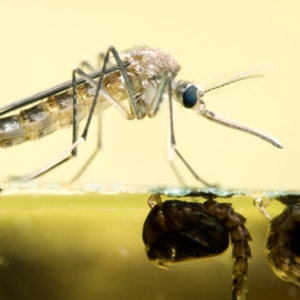
Mosquitoes can become desensitised to the insect repellent DEET, according to a new study.
Although most bugs are strongly deterred by DEET, the researchers had previously found that some mosquitoes and flies carry a genetic change in the odour receptors on their antennae that allows them to ignore the smell.
In their new study on a particular type of mosquito, the researchers found
that a short-term change rather than a genetic adaptation makes them immune to
the repellent's smell for at least a few hours after exposure.
Effects of exposure
"Our study shows that the effects of this exposure last up to three hours. We will be doing further research to determine how long the effect lasts," James Logan, of the London School of Hygiene & Tropical Medicine, said in a journal news release.
The study involved Aedes aegypti mosquitoes, which transmit dengue fever and bite in the daytime. The researchers found that even brief exposure to DEET was enough to desensitise the mosquitoes to the repellent's smell.
Up to three hours after being exposed to DEET, the mosquitoes were not deterred by the product and were still attracted to heat and human skin.
"We think that the mosquitoes are habituating to the repellent, similar to a phenomenon seen with the human sense of smell. However, the human olfactory system is very different from a mosquito's, so the mechanism involved in this case is likely to be very different," Logan said. "This doesn't mean that we should stop using repellents - on the contrary, DEET is a very good repellent and is still recommended for use in high-risk areas. However, we are keeping a close eye on how mosquitoes can overcome the repellent and ways in which we can combat this."
More information
The US Environmental Protection Agency has more about DEET.