Publications
 Partners


What is the optimal number of kids? Two? One? None? Is Three just plain irresponsible? These days, if you're planning a family, it's not just about whether you can financially afford to have children - you must factor in the environment too. After all, your kids are the ones you're leaving it to.
In terms of swelling our total numbers, human reproductive biology is very, very effective.
In 1999, we stood at 6 billion. Just a few years later, in 2011, we hit the “Day of 7 billion”, and now we're full steam ahead to 8 billion in about a decade's time. We'll get to 9 million before mid-21st century, and probably top out and start to level off at around 10-12 billion people in 2100.
This wouldn't be a problem if we had a few spare habitable planets to expand into. We have, of course, only the one.
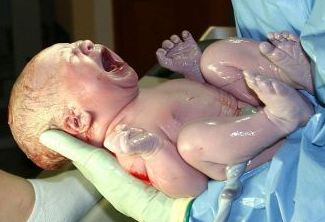
Not just big feet, but many feet
There is still some tiptoeing around making connections between overpopulation and the greatest threat ever to face that one finite planet - human-induced climate change.
Reproductive choice is often skimmed over when we discuss ways to shrink our carbon footprint; the emphasis is more on reducing emissions through home energy use and personal modes of travel.
Sensitivity is certainly called for on the population issue, given that it deals with such fundamental and emotive aspects as our children and reproductive rights. Nonetheless, we must include these in the discussion: climate change, as some environmentalists have quipped, is not just about the size of our carbon footprints, it's also about the number of feet.
A statistical study at Oregon State University, United States, used the term “carbon legacy” for the amount of carbon dioxide each one of us bequeaths the earth in our lifetimes. Each child born into a life of privilege (i.e. into a first-world context) adds about 9441 metric tons of carbon dioxide to one parent's carbon legacy, which is 5.7 times that parent's lifetime emissions.
One of the persistent myths about overpopulation is that it's a problem primarily of poor nations where families have more children than they can financially support. It's true that most of the ongoing population growth is occurring in developing countries, but per capita, the developed world makes a far greater contribution to climate change through "consumption overpopulation".
A child born in the United States will result in almost seven times the carbon emissions of a child born in China, and 168 times that of a child born in Bangladesh.
It is not a viable option for all, but remaining childless (or “childfree”, as some prefer to label it) is one of the most potent choices you can make to decrease your footprint; it far outweighs recycling and cycling to work. As the study's authors put it: “the potential savings from reduced reproduction are huge compared to the savings that can be achieved by changes in lifestyle.”
Why is it, then, that people (especially women) who are essentially doing the world a favour in this respect by not having kids, still get challenged (or pitied) for their choice more than those who decide to procreate?
No one ever asks a parent at a dinner party: “So why did you decide to have kids? Do you ever regret it?”
That's not to say that people with kids don't get and feel criticised too at times: see the friendly debate I had with a parent who argued the case for the "breeders"! But the societal pressure to have children, and the assumption that true life fulfillment can only be gained this way, is still very powerful. This can cause unnecessary unhappiness in people who choose not, or who are unable, to be parents. It can also cause a rift between the childed and the childless, when there are in fact so many opportunities for the two camps to join forces in making the best world for the children who do come into it.
There are many ways to nurture and support the next generation. Parenting your own biological children is still the mainstay of this, but not everyone is in a position or suited to fill this role. You can also make a valid and valuable contribution through adoption, fostering, teaching or helping to raise kids as an involved aunt, uncle or godparent.
References
Murtaugh, P and Schlax, M. (2009) Reproduction and the carbon legacies of individuals. Global Environmental Change.
Population Division, UN Department of Economic and Social Affairs. (2013) World Population Prospects: The 2012 Revision.